
A musty odor in your home that wasn’t there before? Then you should consider moisture problems. Often, a musty smell is the first sign of moisture in the house. Moisture in the exterior wall can also cause this effect. Below, we’ll explain how moisture in the exterior wall can cause a musty smell and what you can do about it.
How Does Moisture Develop in the Exterior Wall?
A damp exterior wall occurs when moisture can penetrate the bricks of the facade. This usually happens through rainwater that can enter through small cracks and fissures.
Old bricks can become damaged after many years of exposure to harsh weather conditions. This also applies to joints, which become increasingly porous over the years and thus absorb water more easily. In this case, we refer to penetrating damp.
But sometimes rising damp can also cause a damp exterior wall, although this is less common. This happens when the damp proof course under the exterior wall, the physical barrier between the ground and the bricks, is no longer effective. Brick by brick, moisture from the ground can then make its way upwards. We mainly know rising damp as a problem for interior walls, but it can also occur in the exterior wall.
What Causes the Musty Smell?
Wet building materials bring a damp odor with them. And that often smells musty and dull. This applies not only to bricks, but also to wet clothing that just won’t dry, for example, which smells anything but fresh. A musty odor is typical of damp materials.
The same applies to the bricks of your walls. When the moisture never dries out, it will start to smell musty over time. However, this odor is not trapped in the bricks of the exterior wall but will also turn inwards. You can therefore often smell a damp exterior wall from inside.
What other Signs Indicate a Damp Exterior Wall?
The characteristic musty odor only appears inside when the exterior wall is saturated with moisture. Often, the moisture problem in the exterior wall is already at an advanced stage by then.
Facades that are affected by moisture problems to such an extent will usually also show other signs of moisture problems. Very typical for damp exterior walls are mosses and algae. These grow with the minerals in the exterior wall and the moisture that is present in the pores of the bricks. Damp walls have a green tinge.
Do you notice a musty smell and suspect that a damp exterior wall is the problem? Then you should look for small cracks in the bricks and in the joints. An exterior wall affected by moisture will logically also look damp for longer after a heavy rain shower. These are all signs that can indicate a damp exterior wall.
How Can You Combat Moisture in the Exterior Wall?
Now that you know the cause and how to recognize a damp exterior wall, we’d also like to tell you how you can combat a damp exterior wall.
In most cases, a water repellent treatment is sufficient. Our experts will come to impregnate the facade with a moisture-resistant agent. Specifically, we will spray the entire facade with a water-repellent liquid that penetrates the damp bricks of your home. This agent will then be absorbed by the bricks. It hardens and thus forms a water-repellent layer on and inside the exterior wall. This agent is completely colorless, so you won’t see anything and your facade will look the same as before. The hydrophobic liquid we use has a vapor-open character, which means that the moisture inside the exterior wall can still escape. The result: a dry exterior wall that will no longer allow moisture to pass through.
It’s important to know that a damp facade must first be thoroughly cleaned. Mosses and algae prevent the water-repellent agent from penetrating the bricks. Cracks and fissures must also be repaired first. If you don’t do this, the hydrophobic agent will not work properly in that spot.
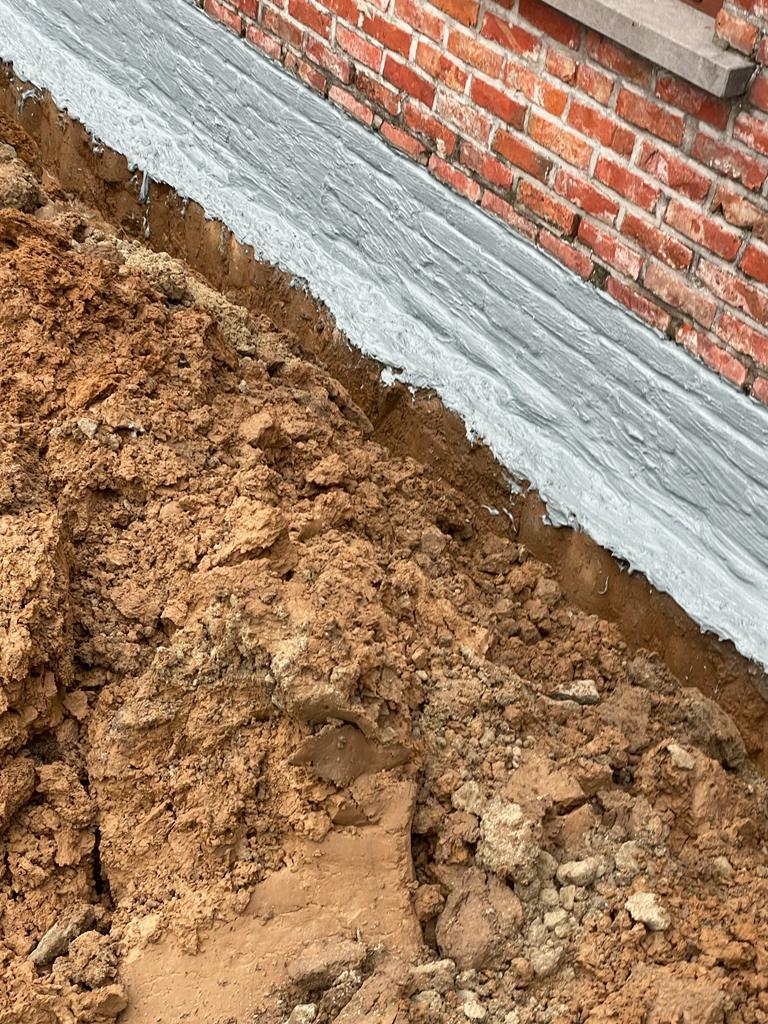
Or Renovate your Damp Exterior Wall
If the facade is in a very poor condition, facade impregnation is no longer sufficient. We then need to consider facade renovation. In this process, the old facade cladding is covered with a new one. This can be bricks or facade strips (thin bricks), but rendering or facade cement are also possibilities. Combine a new facade cladding with insulation to renovate your home and reduce your energy bill.
Solusio Eliminates Musty Odors by Repairing the Exterior Wall
Is there a musty smell in your house? That may be due to moisture. In the case of penetrating damp and moisture in the exterior wall, facade impregnation is recommended. Our Solusio craftsmen have extensive experience with facade impregnations. With the necessary expertise, the musty smell in the house and the moisture problem are quickly resolved. Contact us for free advice or make an appointment.