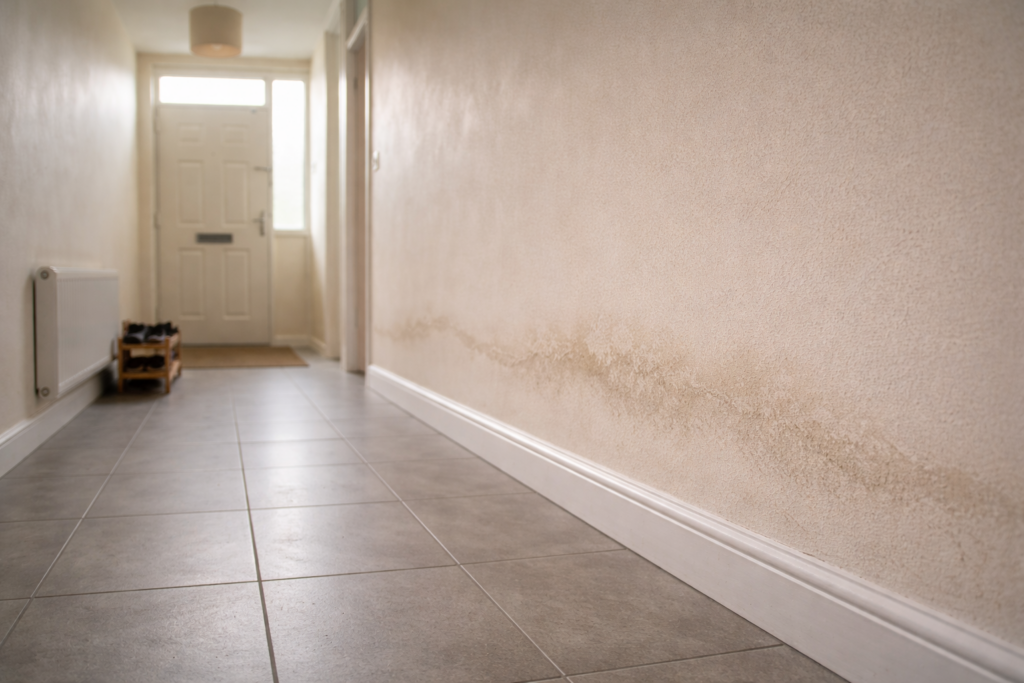
Do you live in a home from the 60s or 70s and have you noticed damp patches, mould, or crumbling plaster? You are certainly not alone. Homes from this period often have structural characteristics that can cause damp problems today. Sometimes it involves a missing or damaged damp-proof course, but facades, cellars, and outdated connections can also play a role.
This does not mean that every home from the 60s or 70s will face damp problems. However, it is important to look beyond the visible damage when a damp problem occurs. Only when the cause is correctly identified can you choose the right solution.
Why are 1960s and 70s homes more susceptible to damp problems?
The way homes were built differs in several ways from current construction methods. In older homes, for example, a proper damp-proof course is sometimes missing, or the original damp-proofing has become damaged over the years.
Materials also age. After several decades, bricks can become more porous, joints can get damaged, and facades can develop small cracks. This allows rainwater to penetrate more easily.
Additionally, many homes from this period have since been renovated. New windows, floor structures, insulation, or a modified heating system can change the way moisture moves through the home. A renovation is not a cause of damp problems in itself, but it can make existing problems more visible.
1. Missing or damaged damp-proof course
One of the most common causes in older homes is rising damp. This is where moisture from the ground is drawn up through the walls. A correct damp-proof course normally forms a barrier against that moisture.
In older homes, this damp-proof course may be missing, functioning insufficiently, or bridged in a certain place. The moisture can then slowly spread through the wall.
Typical signs include damp patches at the bottom of the wall, peeling paint, crumbling plaster, a musty smell, and white salt deposits. The damage is often located in the lower zone of the wall.
A wall injection can provide a solution in many situations. This involves applying a damp-proof barrier into the wall so that ground moisture can no longer rise. Which treatment is suitable, however, depends on the construction and the cause of the problem.
2. Penetrating damp via an outdated facade
The facade also plays an important role in homes that have been exposed to the elements for decades. Bricks and joints can absorb water over time, especially when the facade is damaged or porous.
During heavy rain, water can then penetrate through the facade. Cracks, damaged pointing, and poor seals around windows and doors can exacerbate the problem.
Penetrating damp can be recognised by damp patches that become visible particularly after prolonged or heavy rain. The location of the damp patch can also provide clues about where the water is entering the home.
A facade problem therefore often requires a combination of repair and protection. First, any cracks or damage must be addressed. Depending on the situation, a damp-proof treatment of the facade may then be advisable.
3. A damp cellar
Many homes from the 60s and 70s have a cellar. Because this space is below ground level, it is constantly in contact with ground moisture and potentially groundwater. When the original sealing is insufficient, moisture can penetrate through the cellar walls or floor.
A damp cellar can be recognised by wet patches, white salt deposits, a musty smell, mould, or water appearing in the cellar after heavy rain.
The solution depends on how the water is entering. Sometimes a targeted repair is enough, while a structural damp problem requires a more extensive approach. Solusio therefore first examines the cause during a cellar damp diagnosis.
4. Cracks and damage in the masonry
After several decades, cracks can appear in the masonry. Not every crack immediately signifies a serious structural problem, but cracks can provide an entry point for rainwater.
Especially when damp patches are located at the level of a crack or return every time it rains, it is wise to have the facade and masonry thoroughly checked.
Connections between different building materials also deserve attention. Think, for example, of the transition between facade and window, facade and roof, or different parts of an extension.
5. Renovations that make existing damp problems visible
Many homes from the 60s and 70s have since been renovated. New windows and doors make a home more airtight. A new floor can change the original floor structure. Insulation can also affect the temperature and humidity in certain rooms.
When damp patches or mould suddenly appear after a renovation, it does not automatically mean the renovation is the cause. It could also be that an existing problem was less visible before.
That is why it is important to detect existing damp problems before starting renovation work. Addressing a problem before the renovation often prevents additional damage to new finishes.
Want to have damp problems in an older home investigated? Solusio is happy to help
A home from the 60s or 70s certainly doesn’t have to have damp problems. But when you notice damp patches, mould, crumbling plaster, or a musty smell, it is wise not to just treat the visible damage.
The right solution starts with finding the cause. This prevents you from repainting or renovating the walls only to see the same damp patches reappear a few months later.
Want to know where the moisture in your home is coming from? Solusio carries out a free damp diagnosis and provides advice on the most suitable treatment for your situation.
Request your free damp diagnosis today and discover how you can sustainably tackle the damp problem in your home.