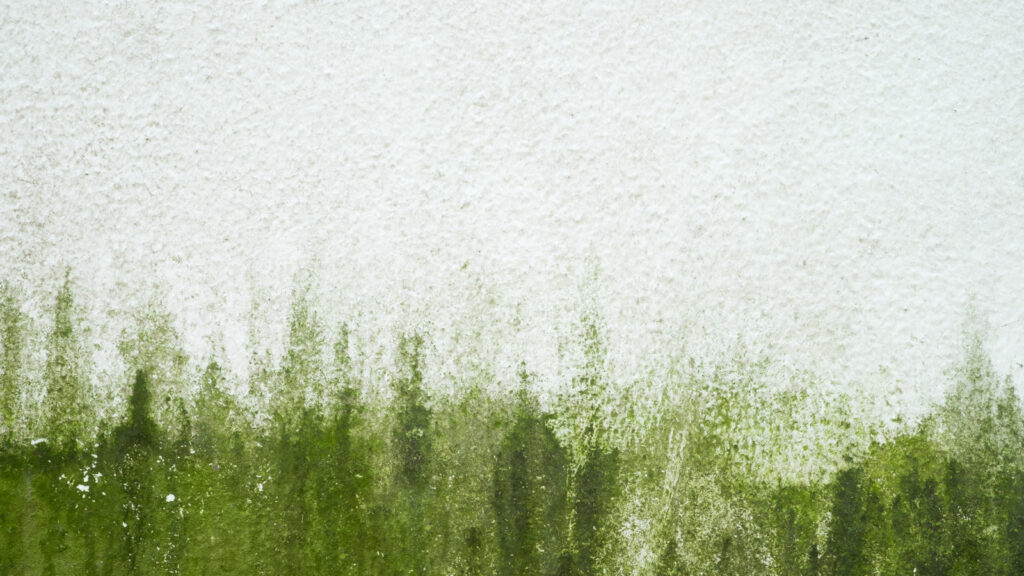
Do you notice green, dark, or stained patches on your facade? This is often caused by biological growth such as algae, moss, or fungi. Facades that remain damp for long periods, receive little sunlight, or are located close to trees and vegetation are particularly susceptible. These deposits don’t just look untidy; they can also indicate that the facade is not drying out quickly enough.
Green deposits do not automatically mean your facade is seriously damaged. However, it is wise to assess the cause first before choosing a cleaning method. The wrong treatment can damage render, mortar joints, or porous bricks.
What are those green deposits on the facade?
A green facade is usually caused by microorganisms that develop on a damp surface. Algae often form a thin green layer. Moss tends to grow on rough surfaces and in joints. Dark or black discolouration can also consist of fungi, atmospheric dirt, or a combination of different pollutants.
According to Buildwise, biological contamination of exterior render often consists of algae, cyanobacteria, and fungi. The correct treatment depends on the appearance, the substrate, and how far the contamination has progressed.
Why do some facades turn green faster than others?
Dampness is the most important factor. A facade that dries quickly after rain offers fewer opportunities for algae and moss. A north or north-east facing facade receives less sun and generally stays wet longer. Shade from trees, a thick hedge, or a nearby building also slows down the drying process.
In addition, the texture and colour of the finish play a role. Contamination is more noticeable on light-coloured render. A rough or porous substrate retains water and dirt longer. Overflowing gutters, leaking downpipes, poor drip edges, and splashing rainwater can put extra strain on certain areas.
Are green deposits harmful to the facade?
Initial algae growth is often primarily an aesthetic problem. However, when the facade remains constantly damp, it can eventually lead to other damage. Think of weathered joints, cracks, peeling finishes, or a facade that absorbs a lot of rainwater.
The contamination itself doesn’t tell the whole story. Check for local causes, such as a faulty gutter or water running down a windowsill. If damp patches also appear on the inside, there may be water infiltration or penetrating damp.
Can you remove green deposits yourself?
Minor contamination can sometimes be tackled with a suitable product and gentle cleaning. Always test on an inconspicuous area first and follow the manufacturer’s instructions. Protect windows, metal parts, plants, and the soil around the house.
Do not simply use a high-pressure cleaner. Excessive pressure can damage render, wear away joints, or push water deeper into a porous facade. This may make the facade look clean initially, but it often leads to more damage later. Aggressive products can also cause discolouration or degradation.
How is a biologically contaminated facade professionally cleaned?
The treatment begins with an assessment of the substrate. Brick, natural stone, and facades with exterior render do not require the same approach. The colour and thickness of the contamination are also important.
For uniform green deposits, a specialized treatment product may sometimes suffice. Dark or stubborn contamination may require a combination of careful cleaning and aftercare. With an ETICS facade, the vulnerability of the render system must be taken into account.
If there are cracks, poor joints, or faulty connections, these are best repaired first. Otherwise, the facade is cleaned without addressing the underlying cause of the damp problem.
How do you prevent algae from returning quickly?
It is not always possible to keep a facade completely free of biological growth. However, you can limit the risk by maintaining gutters and downpipes, repairing leaking connections, and keeping vegetation at a sufficient distance from the facade.
Also check windowsills, roof edges, and areas close to ground level. Rainwater must be directed away from the facade and should not constantly splash against the same spot. For porous facades, a suitable protective treatment can be considered after repair and cleaning. Read more about waterproofing an exterior wall.
Have the facade assessed first
Green deposits are often easy to treat, but the cleaning method must suit the facade. Especially with render, cracks, or recurring contamination, a prior inspection is wise.
Want to know if cleaning is enough or if the facade needs repair first? Contact Solusio for a free site visit. We will examine the substrate, the damp load, and the most suitable approach.