Rising Damp in your House? We Deal with Damp Walls.
Rising Damp Occurs when Ground Moisture Rises through Building Materials into the Walls of a House. The Moisture Can Spread to a Height of about one Meter and Causes Damage to Plasterwork, Peeling Paint, and an Unhealthy Indoor Climate.
It's Best to Intervene Quickly when You See Signs of Rising Damp.
What are the exact causes of rising damp?
Rising damp always occurs in the lowest areas of the house and usually has one of the following causes:
-
Missing damp-proof course: in older houses, a damp-proof course (such as asphalt paper or DPC foil) was often not installed, allowing ground moisture to penetrate directly into the masonry.
-
Worn or damaged damp-proof course: an existing damp-proof course can deteriorate, crack, or break over time, causing it to lose its protective function.
-
Plasterwork that extends too low: when plasterwork was applied down to floor level, moisture can creep up through this layer and spread further into the wall.
A common consequence of rising damp is also a damp basement, as the ground moisture penetrates there first before it becomes visible higher up in the house.
1. A damp basement due to rising damp
Basements are naturally more susceptible to moisture, as they are completely surrounded by soil and therefore by groundwater, seepage water, and humid air.
Moisture can enter the basement in various ways: through walls, floor, joints, leaks, or even through condensation due to lack of ventilation.
When basement walls remain damp for extended periods, they become completely saturated.
The moisture can then begin to rise to higher parts of the house, resulting in not only a wet basement but also damp walls on the ground floor.
Haven’t renovated or waterproofed your basement in a long time?
Then we recommend doing so as soon as possible to prevent further damage and rising damp.
2. An older house without a cavity wall
Houses built before 1908 are also at risk for rising damp.
Many older houses lack cavity walls.
A cavity wall consists of two walls with an air space between them. This space ensures that moisture entering the outer wall cannot immediately penetrate through to the inner wall.
Modern cavity walls also incorporate a damp proof course:
a membrane that blocks and drains moisture, preventing it from penetrating the masonry.
Thanks to the cavity and damp proof course, interior walls are much less likely to become damp.
Houses without cavity walls therefore have a higher risk of rising damp, as the masonry is in direct contact with the damp ground or wet exterior wall.

How serious is rising damp?
Rising damp is one of the most persistent and damaging moisture problems in homes. How serious the problem becomes depends on factors such as:
-
the height of the water table,
-
the porosity of the walls,
-
and the thickness and age of the materials used.
If rising damp is not addressed in time, it can cause major damage:
-
peeling plaster
-
flaking paint
-
mold formation
-
salt efflorescence (saltpeter)
-
structural weakening of masonry
Over time, rising damp can even affect the structural stability of your home. Therefore, it is essential to have a professional moisture diagnosis performed in a timely manner by experienced experts.
Rising Damp is a Persistent Moisture Problem
Rising damp, capillary moisture, or ascending moisture is one of the most common moisture problems.
- It usually starts as a damp spot at the bottom of the wall.
- The moisture then makes its way through the wall and can reach increasingly higher levels.
How Do We Combat Rising Damp?
Rising damp is a persistent problem that, if not stopped, can cause significant damage to walls, plasterwork, and the structure of your home. Fortunately, there are various methods to permanently solve rising damp. The most suitable solution depends on the condition of the house, the severity of the problem, the nature of the masonry, and the way the moisture manifests itself.
1. Wall injection: the most chosen solution
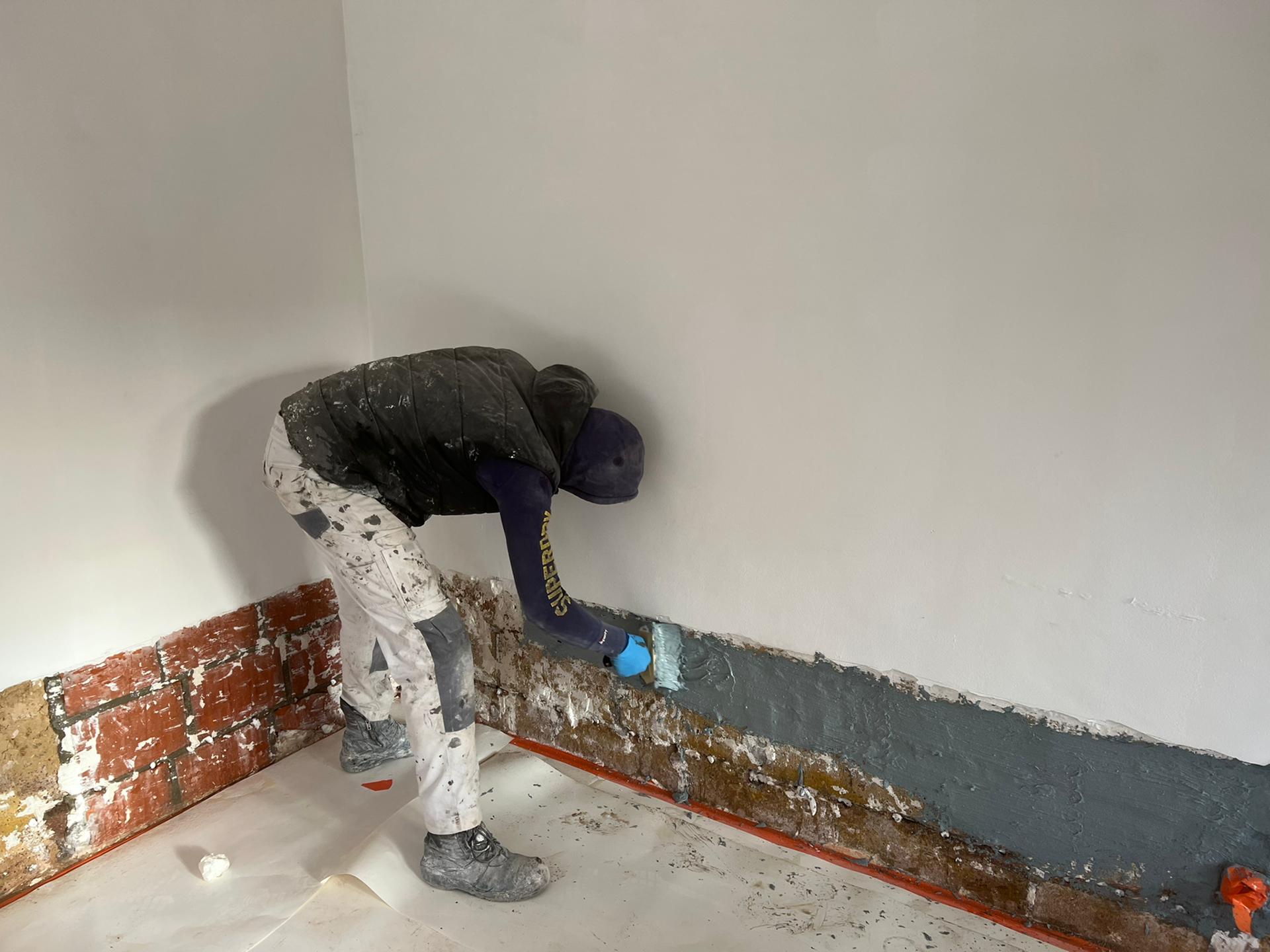
In most homes, rising damp can be excellently stopped with a professional wall injection.
Our specialists drill multiple openings in the wall just above floor level, every 10 to 12 centimeters. These are filled with a moisture-repellent gel or resin.
This gel:
-
spreads deep into the masonry,
-
forms a permanent water barrier after curing,
-
stops the rising damp,
-
makes the wall dry and solid again.
After the injection, the walls can drain, dry out, and be replastered or finished.
Wall injection is an efficient, budget-friendly solution with a very high success rate.
2. Undercutting walls: installing a new water barrier
For homes with severe or complex moisture problems, a more invasive method may be necessary: undercutting the walls.
How does this work?
-
Horizontal grooves are milled into the masonry.
-
The wall is essentially lifted slightly.
-
A new synthetic water barrier is placed in the grooves.
-
This water barrier blocks all rising moisture flows from now on.
This technique creates the same effect as a modern cavity wall with a water barrier.
Because this method requires extensive work and the wall must be completely finished afterwards, it is usually applied in combination with a renovation.
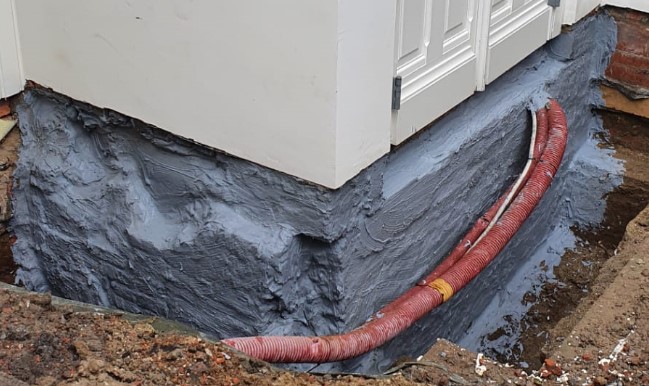
3. Addressing your basement against rising damp
Moisture problems in the basement often form the source of rising damp at higher levels. Therefore, when dealing with a damp basement, the basement situation must always be addressed first.
Depending on the severity, there are three options:
➤ Wall injection in the basement
Ideal for localized problems or light seepage.
➤ Basement sealing (rigid tanking)
The existing finish is partially removed and replaced with:
-
waterproof mortars,
-
resin layers,
-
new protective coatings.
This forms a waterproof tank preventing moisture from entering the basement space.
➤ Basement drainage (flexible tanking)
This involves installing a dimpled membrane that collects moisture and drains it via a pump system. This is ideal for high groundwater levels or recurring water issues.
The system ensures your basement remains permanently dry and prevents moisture from rising upwards.
Which method is suitable for your home?
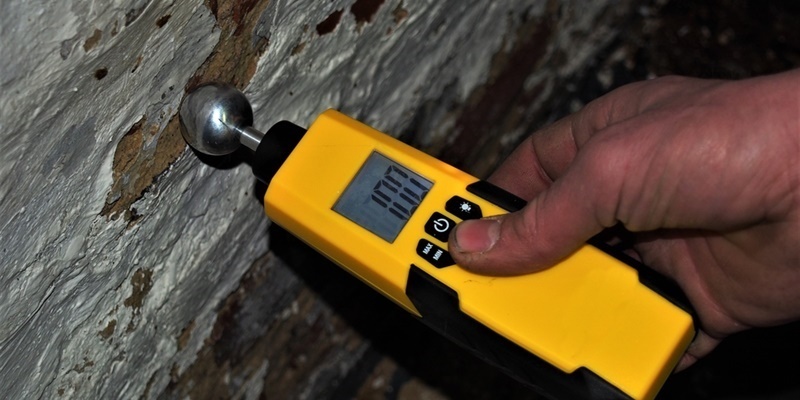
We always determine this based on a free moisture diagnosis.
Our experts examine:
-
the moisture levels in the wall,
-
the condition of the damp-proof course,
-
the structure of the masonry,
-
and the severity of the damage.
Based on this, you’ll receive a clear, personalized solution that stops the moisture at its source.
Also troubled by rising damp?
Contact Solusio for a definitive solution.
What if You Do Nothing about Rising Damp?
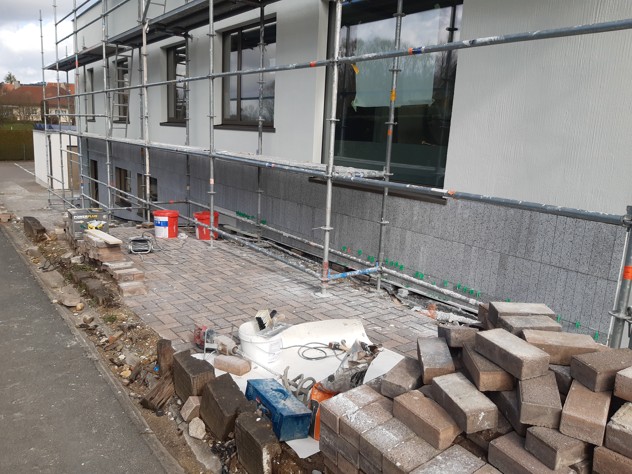
At first, you only see a small moisture problem, so you might think it’s not that urgent. But ignoring rising damp can lead to much bigger problems in your home in the longer term.
- Crumbling plaster, paint, or loose wallpaper: the finishing layers of the wall are damaged by the water
- Mold formation: the damp wall is a breeding ground for molds that can be harmful to your health.
- Unpleasant odor: damp spots are often accompanied by a musty smell that lingers in the house. With molds, it gets even worse.
- Structural damage: long-term moisture problems can cause wood rot in skirting boards, wooden floors, and woodwork.
- Higher energy bill: damp walls are detrimental to your home’s insulation, causing you to heat more to warm the house.
- Bad for your health: Moisture and mold release spores that you inhale. This can lead to respiratory problems, allergies, irritations, and lowered immunity.
- Bad for your wallet: Moisture problems not only cause structural damage but also lead to additional costs such as repairs, painting work, and higher energy bills.
In short, don’t leave that rising damp unattended for too long and address it in time!
Frequently Asked Questions about Moisture Control
How much Does Moisture Control Cost?
It’s not easy to put an exact price on moisture control. The price is determined by many factors. Each situation is different and therefore has a different price. The main price determinant is the type of treatment. The extent of the problem also plays an important role. Below, we give you some indicative prices so you can already get an idea of the cost of moisture control.
| Type of treatment | Price indication |
|---|---|
| Ventilation system | from € 1,500 to € 6,000 |
| Wall injection against rising damp | from € 85 per m² |
| Facade impregnation | from € 10 – € 35 per m² |
| New facade cladding | from € 50 – € 300 per m² |
| Basement waterproofing | from € 4,000 |
Are there Subsidies for Moisture Control?
You can soften the prices of moisture treatments by applying for a subsidy. Controlling moisture problems is considered a renovation project. Therefore, you can apply for a renovation subsidy.
Previously, this was the Flemish renovation subsidy and an energy subsidy from Fluvius, but from October 1, 2022, these subsidies were merged into the My Renovation Subsidy. You can get up to 50% of the cost back as a subsidy.