When renovating the exterior of your home, choosing the facade cladding is an important decision. You want a facade that looks good, is durable, and requires little maintenance. Two popular options for facade cladding are spray cork and crepi. But what exactly are these materials and what are their advantages and disadvantages? You’ll find out below.
What is Spray Cork?
Spray cork is a relatively new material in the world of facade cladding. It’s a mixture of ground cork granules, resins, and additives that is sprayed as a thin layer on the exterior walls of a building.
Spray cork forms a durable, insulating, and decorative finish. It offers protection against weather influences, improves a building’s insulation, and has a natural appearance.
What is Crepi?
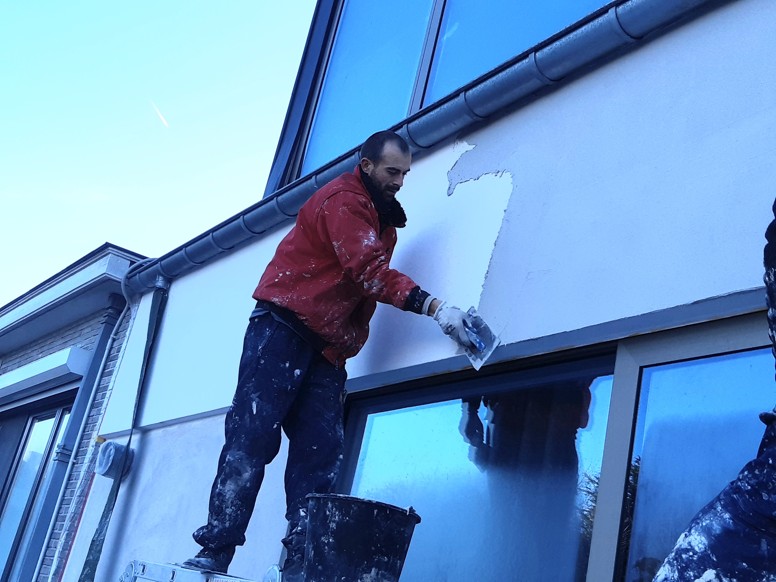
Crepi, also known as decorative plaster, is a commonly used material for facade cladding. It’s a mixture of sand, cement, and lime. Crepi is applied to walls using a plastering technique and can have various textures and finishes.
We distinguish between two types of crepi: mineral crepi and synthetic crepi. The main difference between mineral crepi and synthetic crepi is the binder used. Mineral crepi uses a binder based on cement and lime, while synthetic crepi contains synthetic binders, such as synthetic resins. Mineral crepi typically has a more robust appearance and is suitable for more traditional applications, while synthetic crepi is applied in a thin layer. The advantage of synthetic crepi is that it’s extra waterproof and scratch-resistant, but unlike mineral crepi, it can’t conceal unevenness in the wall.
Advantages of Spray Cork
1. Natural Appearance
Spray cork has a warm and natural appearance, similar to traditional cork. This is a big advantage for those who prefer a soft look.
2. Insulation
One of the notable advantages of spray cork is its insulating properties. It can help improve the thermal efficiency of your home. You’ll notice this at the end of the month on your energy bill.
3. Elastic and Crack-Resistant
Spray cork is elastic and can expand and contract without cracking. In our country, where winters are cold and summers are getting increasingly warmer, this is a big advantage. You don’t have to worry about cracks in the facade.
4. Low Maintenance
Spray cork requires little maintenance. It’s resistant to mold and moisture, so there’s little green growth. A simple and occasional cleaning is therefore sufficient.
5. Environmentally Friendly
Because spray cork is made from natural materials, it’s an environmentally friendly choice. It’s also fully recyclable. Ideal for those who want a green home!

Advantages of Crepi
But traditional crepi remains a good choice as well.
1. Various Finishes
The great advantage of crepi is that you can finish it in various ways. Crepi comes in all colors and you choose the thickness of the grain yourself. You can therefore fully adapt the style of your facade to your personal preference. Whether you want a smooth finish or a rustic texture, it’s possible with crepi.
2. Durability
Crepi is generally very durable and can last for decades. It protects your exterior walls against weather influences and wear, just like spray cork.
3. Waterproof
Crepi is naturally a water-repellent material. Synthetic crepi is extra waterproof and will therefore provide even better protection against weather influences. You can optionally provide mineral crepi with a water-repellent layer, a so-called hydrofuge, for extra protection against rain.
4. Color Options
Crepi is available in more than 400 colors. So there’s much more possible than traditional white crepi. Colored crepi makes painting unnecessary. This way, you save a step – and costs.

When is Crepi or Spray Cork the Better Option?
Both spray cork and crepi are good choices and have many advantages. The choice between the two materials depends on your aesthetic preference and insulation needs.
- Both materials are durable and will last for a long time.
- Both spray cork and crepi will also protect the existing facade against rain, prevent moisture penetration, and require little maintenance.
- The price is also comparable.
- The biggest difference lies in the finish. With crepi, you have more options in terms of texture,
- with spray cork, you get a more natural look.
- Spray cork has a higher insulating value than crepi.
Crepi or Spray Cork? Solusio Helps You Choose
If you’re in doubt, it’s advisable to seek advice from the professionals at Solusio. We’ll help you make the right choice based on your specific needs and the characteristics of your home. Whatever you choose, both spray cork and crepi will protect and beautify your exterior walls, giving your house a renewed appearance.
Contact us today for more information and free advice. We’d be happy to visit and tell you more about crepi, spray cork, and other facade claddings.