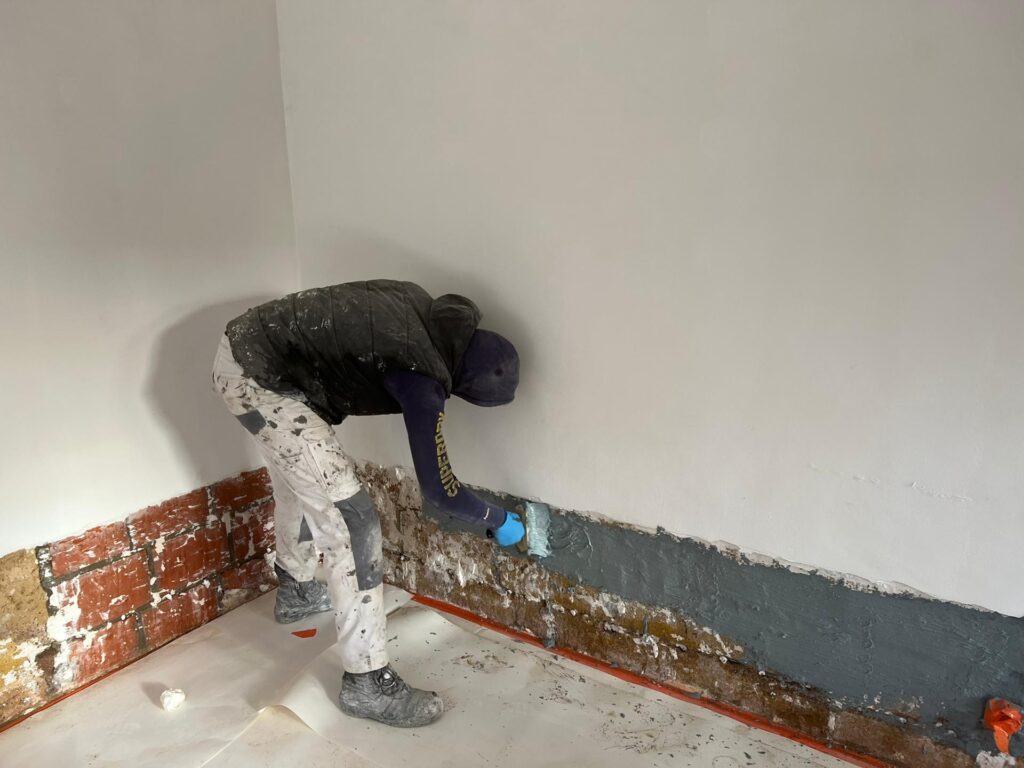
Moisture in houses is far from exceptional. Many homes in Flanders, both old and new, face this issue sooner or later. But how do you tackle moisture problems? That depends on the cause of the damp walls. Rising damp, water penetrating through the facade, condensation moisture, and water in the basement all require different treatments. Below, we’ll guide you through the solutions for damp walls in houses.
How Do Damp Walls in Houses Occur?
The solution you choose for damp walls in your house thus depends on how the moisture has entered your home and where it’s located. That’s why it’s crucial to rely on the knowledge and expertise of an expert. At Solusio, we provide you with a free moisture diagnosis and develop a treatment plan.
Damp Walls in Houses Due to Rising Damp
When thinking of moisture problems, you probably immediately think of damp spots at the bottom of walls. That’s the typical phenomenon of rising damp. You can recognize damp walls caused by rising damp by these moisture spots that can usually be found up to one and a half meters above the ground on the ground floor. Such moisture problems can occur not only in interior walls but also in the facade.
In this case, the moisture enters through the subsoil. Usually, your home is protected against moisture by a damp proof course, a foil located under the walls. However, in old houses, this moisture barrier is often missing or may have become defective. The water from the subsoil then comes into contact with the bricks, resulting in damp walls.
Condensation Problems and Damp Walls
The most common moisture problem in houses, however, is condensation. Condensation occurs when the indoor humidity is too high and there isn’t enough ventilation. The water vapor in the air then condenses on the walls, and the formed water droplets penetrate the building material. You’ll find this type of damp walls mainly in bathrooms, basements, laundry rooms, and kitchens. Condensation moisture is almost always accompanied by mold.
Penetrating Damp in Houses
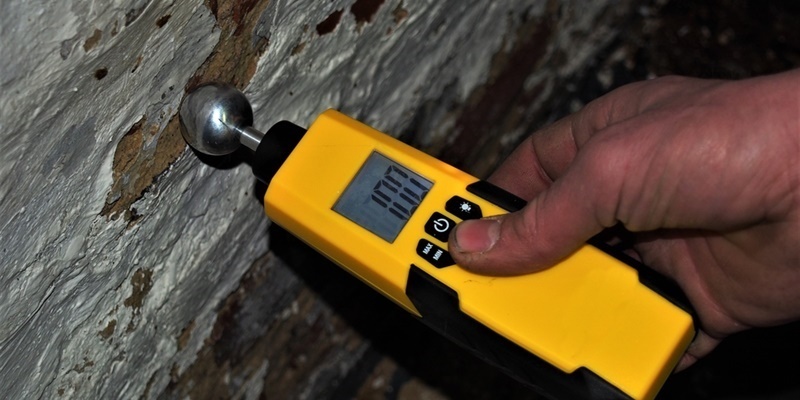
Moisture problems can also have an external cause. The moisture then penetrates from outside to inside. This penetrating damp is usually due to a worn or damaged facade. Rainwater can then seep in through cracks and cause damp walls. That’s why it’s important to maintain your facade well. Both the masonry and the bricks become porous over time and show cracks. Large temperature fluctuations only make this problem worse.
Solutions for Damp Walls Caused by Rising Damp
But what are the solutions for all these types of moisture problems? If rising damp is the culprit, we can usually drive the moisture out of the walls with a wall injection. We drill holes in the damp walls and fill them with a moisture-repellent agent. This spreads into all pores of the building material, preventing groundwater from rising further. If the problem is too severe, we may also recommend installing a cavity wall, if you don’t have one, and applying a new damp proof course.
Solutions for Condensation Problems and Associated Moisture
Condensation problems are common and fortunately relatively easy to solve. The way to prevent and combat damp walls due to condensation is by ventilating. This can be done by opening windows, but it’s much better to install a ventilation system. This way, you don’t need to let in cold outside air, and the air is continuously filtered. Water vapor is extracted from the air, preventing damp walls from forming. And of course, you also significantly improve the air quality. Only advantages, therefore.
Solutions for Damp Walls Due to Penetrating Damp
When the damp walls in a house are due to a defective facade, the facade naturally needs to be addressed. All cracks must be repaired, and damaged bricks should be replaced. Fine cracks can also be filled with a wall injection.
Even more important is to prevent future penetrating moisture. You do this with a water repellent, which is recommended for every type of facade after a renovation. First, we thoroughly clean the facade, repair the cracks, and then apply a hydrophobic agent. This prevents rainwater from coming into direct contact with the bricks. It’s not only a solution for damp walls in the house but also an excellent way to prevent green deposits and dirt. So you extend the lifespan of the facade.
Solutions for Moisture in the Basement
It’s no surprise that basements often deal with moisture problems. The walls are surrounded by damp soil, especially after heavy rainfall or when you live in an area with high groundwater pressure. How you tackle damp walls in the basement again depends on the cause.
If you catch it early, a wall injection is sufficient. Moisture usually enters the basement at the point where the basement walls and floor meet. We can strategically inject this area with a moisture-repellent agent to combat damp walls. If you’ve paid little attention to the damp walls in the basement, larger measures are probably necessary. We can line the basement walls with several layers of a cement mixture, a so-called basement tanking, to stop moisture. When there are often puddles in the basement, basement drainage is advisable.
Solusio Combats Damp Walls in Houses
At Solusio, we have a solution for every moisture problem. Contact us, and we’ll be happy to assist you with practical advice and craftsmanship. Whether you’re dealing with rising damp, penetrating damp, condensation, a damp basement, or mold on the walls, we’re here to help. Request your free moisture analysis here.