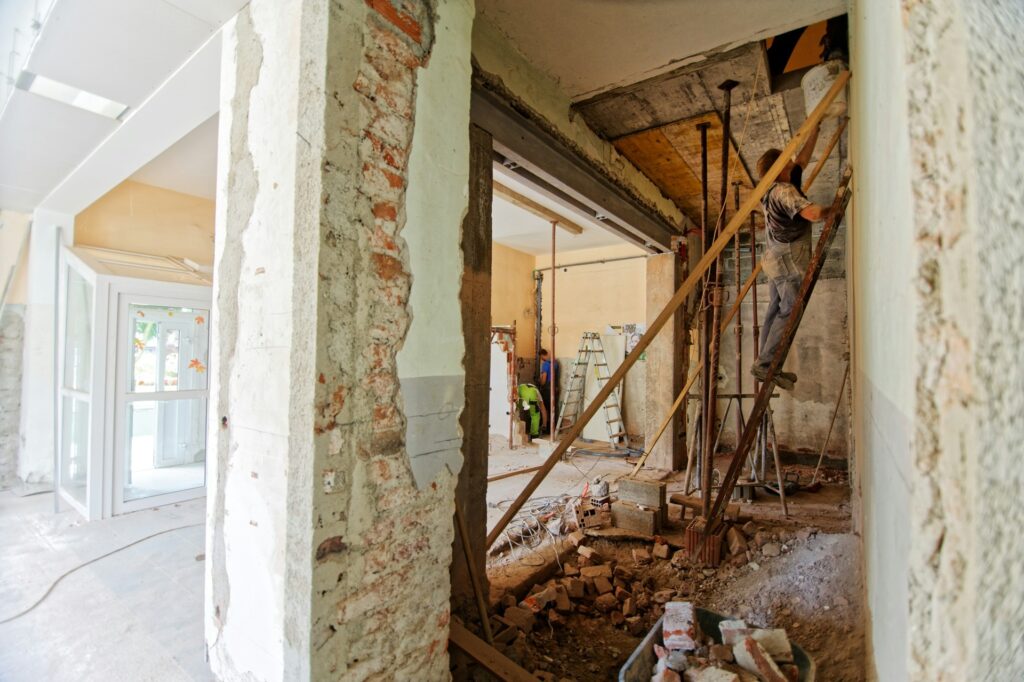
A total renovation is the ideal time to detect damp problems at an early stage and implement preventive damp proofing. Failing to tackle damp in time risks the need for new renovation work later on.
No renovation without damp proofing
In any case, you shouldn’t just let damp run its course. Damp problems can cause significant damage:
- Mold growth
- Peeling plasterwork
- Peeling paint
- Damaged floors
- Musty odors
- Degradation of insulation materials
- An unhealthy indoor climate
- Structural damage to load-bearing walls
- Wood rot
During a total renovation, large parts of the home are exposed. This is the perfect moment to detect existing damp problems and tackle them structurally. Even when no visible damage is present, a preventive check can uncover hidden issues. Especially with older homes, this is certainly not an unnecessary luxury.
Damp proofing in a total renovation
Not every damp problem starts the same way. During a total renovation, specialists first determine which type of damp problem is present and which treatment is required.
Tackling rising damp
Rising damp occurs when ground moisture draws up into the walls via the foundations. Older homes without a proper damp-proof course are particularly susceptible to this.
Typical signs include:
- damp patches at the bottom of the wall
- peeling wallpaper or plasterwork
- white salt deposits
- a musty smell
The most common solution consists of wall injections. Specialists apply a water-repellent product into the wall to form a new damp-proof course. This prevents ground moisture from drawing up any further.
More about rising damp and wall injections
Solving penetrating damp during facade renovation
Many renovation projects involve new insulation or a facade renovation. This makes it the perfect time to tackle penetrating damp. Penetrating damp occurs when rainwater enters through damaged or porous facades. Typical culprits are worn joints or porous bricks.
Broken joints must be repaired, damaged bricks replaced, and cracks professionally sealed. Afterwards, we can apply a hydrofuge treatment to the facade. This makes the facade water-repellent without changing the appearance of the wall.
Preventing condensation damp with good ventilation
Modern renovations make homes increasingly better insulated and more airtight. While positive for energy consumption, it also increases the risk of condensation damp. Condensation occurs when warm, moist indoor air settles on cold surfaces. This causes the typical condensation on windows, but it can also lead to damp patches and mold.
During a total renovation, ventilation must therefore be included in the renovation plan. In the best-case scenario, you install a mechanical ventilation system (Type D). Moist air is then continuously extracted while fresh outdoor air is brought in, all without losing heat.
More about ventilation and condensation control
Tackling basement damp
Many people want to convert their basement into storage space, a laundry room, a hobby room, or even extra living space during a renovation. But for that, the basement must, of course, be completely dry.
Depending on the situation, specialists usually opt for basement tanking or basement drainage. With the first method, we make the entire basement waterproof from the inside using special cement layers. With the second method, we drain entering water in a controlled manner via a drainage system.
Preventive damp proofing during renovations
Besides tackling existing damp problems, a total renovation is also the ideal time to prevent new damp issues. Many damp problems are caused by small construction errors or poor connections during renovation work.
Avoiding thermal bridges
When insulation is not placed correctly, thermal bridges occur. These are zones where heat is lost and where condensation forms more easily.
That is why it is important that:
- insulation boards fit together tightly
- windows are installed correctly
- connections are finished airtight
- roof and wall insulation connect seamlessly
Correct execution prevents both damp problems and energy loss.
Making the roof completely waterproof
A leaking roof causes serious damp problems in walls, ceilings, and insulation. Therefore, a thorough roof inspection belongs in every total renovation. Consider not just broken tiles, but also gutters that don’t work properly or the seals between the roof and the exterior wall. These are weak spots.
Correct rainwater drainage
Rainwater drainage also plays an important role in damp prevention. Clogged gutters or a lack of damp proofing at the foundations cause water to stand against the facade. Proper drainage reduces the risk of penetrating damp.
Providing ventilation in damp rooms
In bathrooms, kitchens, laundry rooms, and even bedrooms, we produce a lot of moisture daily. Therefore, these rooms must be sufficiently ventilated. The best way to do this is with a mechanical ventilation system.
Solusio fights and prevents damp during your total renovation
A total renovation is the ideal time to tackle damp problems once and for all and prevent future damage. At Solusio, we map out existing damp problems and look for potential pain points for the future. Damp proofing, whether preventive or not, is of great importance when planning a total renovation.
Curious for more? Contact us today without obligation. We will be happy to help you further.