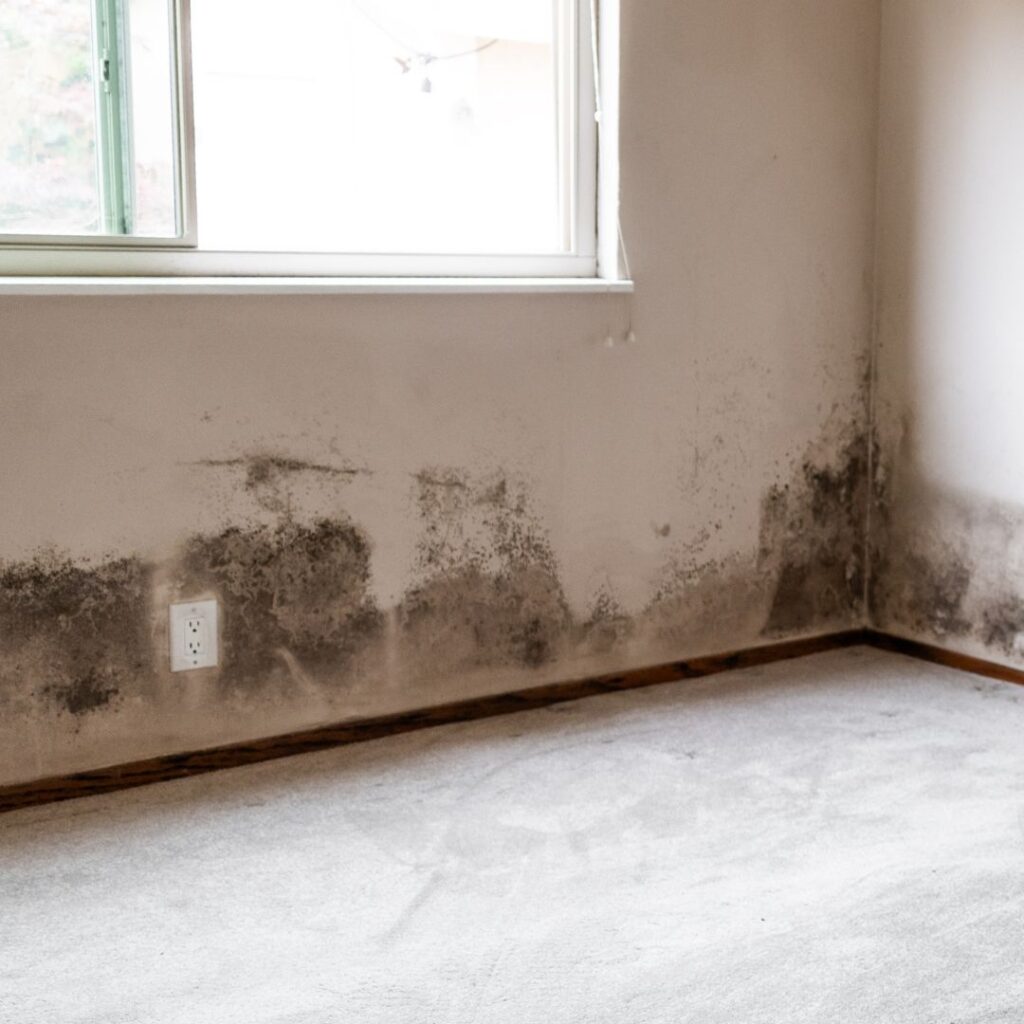
It may have already happened to you: you notice a dark spot on the wall, but suddenly it seems to disappear again… only to resurface later. This gives a false sense of reassurance. If the damp patch disappears on its own, you don’t need to address that moisture. Right?
Unfortunately, just because damp patches sometimes disappear doesn’t mean they shouldn’t be tackled. On the contrary, it proves that the underlying problem is still present. Where do these damp patches come from? And how can you make them vanish once and for all? You can read all about it here.
Damp patches have various causes
Not every damp patch is created in the same way. To tackle the problem correctly, you first need to know what the cause is. The three most common forms are rising damp, penetrating damp, and condensation.
Rising Damp
Rising damp occurs when groundwater draws up into the walls via the foundations. This usually happens in older homes where there is no damp-proof course or where it has been damaged. The moisture rises from the ground and leaves clear traces: peeling paint, loosening plasterwork, and sometimes white salts on the walls. You mainly find this type of moisture problem on the ground floor, and it is quite persistent.
Penetrating damp
Penetrating damp occurs when rainwater penetrates inwards through the exterior facade. The culprits: porous bricks, damaged joints, or cracks in the facade. The damp patches first appear on the outer walls. During prolonged rain, you see them more clearly, while they can become less visible in dry weather. If you don’t address the problem, you will also get moisture problems in the interior walls.
Condensation
Condensation is the result of moist air condensing on cold surfaces. You often see this in rooms such as bathrooms, kitchens, and bedrooms. Typical signs are fogged windows, mold growth, and damp patches on walls and ceilings. Condensation is always related to insufficient ventilation and high indoor humidity.
Why damp patches can disappear
The fact that damp patches sometimes disappear does not mean the problem is solved. It mainly has to do with weather conditions.
Not with rising damp…
With rising damp, damp patches generally do not disappear completely. They may become less visible during drier periods, but the moisture remains continuously present in the wall. That is why this form of moisture is usually constant and structural.
… but it does happen with penetrating damp or condensation
With penetrating damp, it’s a different story. Because rainwater is the source here, damp patches can temporarily dry out during the summer months. The wall then has the chance to evaporate. But as soon as it rains again, the problem returns.
With condensation, damp patches can also fluctuate. In winter, when we don’t open the windows often enough and the humidity level is higher, we quickly see condensation forming. In summer, that is not the case. Condensation spots can therefore also disappear and return, but the underlying problem remains: a lack of ventilation.
How we tackle moisture
Because every form of moisture has a different cause, a targeted approach is essential. Each type of moisture problem simply requires a different solution. A correct diagnosis (by a moisture expert!) is therefore always the first step toward a sustainable solution.
Repairing the facade and hydrofuge for penetrating damp
With penetrating damp, the solution lies on the outside of the home. Damaged joints must be repaired and cracks in the facade must be sealed. In addition, we will usually recommend a hydrofuge treatment. We then impregnate the facade with a water-repellent product that prevents rainwater from penetrating further, while allowing the wall to continue breathing.
Ventilation system for condensation problems
You tackle condensation by reducing indoor humidity. You do this primarily by ventilating better. A mechanical ventilation system offers a solution. It ensures a constant supply of fresh air and removes moist air. This prevents condensation from forming. Regular airing, throwing windows open after cooking or showering, and drying laundry outside are actions that also play their part.
Wall injection for rising damp
Rising damp requires a structural solution. The most effective method is wall injection. We then inject a water-repellent gel or liquid under pressure at the bottom of the wall, into holes specifically drilled for that purpose. That product penetrates the entire brick, hardens, and forms a waterproof barrier there.
Solusio fights moisture in your area
Are you suffering from damp patches that disappear and return? Then it is important not to wait any longer. What looks like a small stain today can lead to major damage to your home over time.
Solusio helps you with a professional analysis and a tailor-made solution. Whether it concerns rising damp, penetrating damp, or condensation problems: we ensure a sustainable approach that works. Contact us today without obligation.