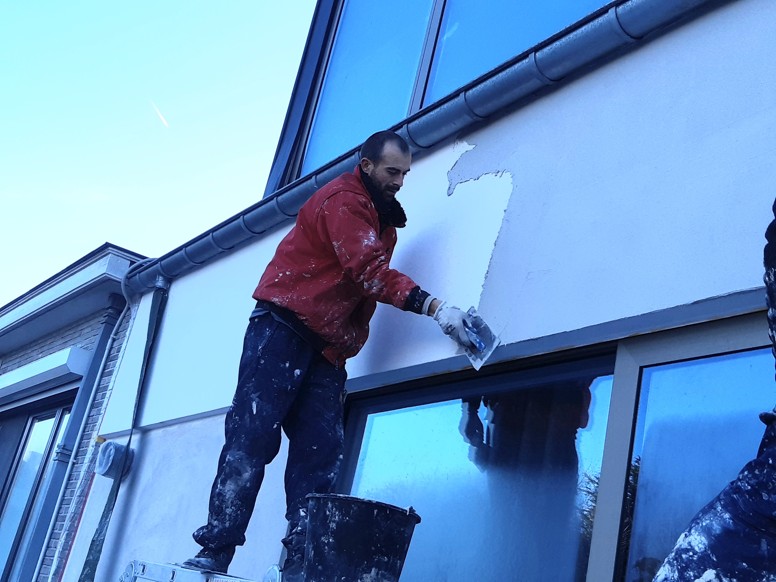
Crepi, also known as decorative plaster, is a popular facade cladding that can give your home a real upgrade. Crepi protects your facade against weather conditions and creates a beautiful, uniform effect. Moreover, crepi is particularly versatile. You can choose the thickness of the grain yourself, and you also choose the color entirely. This way, you can adapt crepi to your personal taste and the architectural style of your house. Are you convinced of the many advantages of crepi, but not sure which color to choose? We’re happy to help you get started.
The ABC of Crepi
Crepi is a mixture of sand, cement, lime, and water. It is a durable and weather-resistant finish for exterior walls.
- There is a mineral variant, which can be applied in thick layers to hide unevenness in old facades,
- but nowadays a synthetic variant is often used as well.
- Synthetic resins are then added to the mixture. This makes the crepi extra waterproof and resistant to cracks.
Colored Crepi
The base of crepi usually has a neutral, grayish-white color, but by adding pigments to the mixture, you can obtain up to 400 different shades in total.
The pigments are added to the crepi mixture during production. So you don’t have to paint afterwards, and the pigment can’t crumble.
The possibilities are truly endless. There are countless color options available, ranging from soft earth tones to vibrant and bold colors. So you can let your creativity run wild. Or is it better to stick to a neutral shade?
What are the most Popular Shades for Crepi?
Whether you’re aiming for a traditional look or want to achieve a bold result, there’s a color that suits your home. We’re happy to list the most popular and striking shades to inspire you.
White Crepi
The classic, of course, is simply white crepi. It remains the most popular choice to this day. It fits perfectly with characterful farmhouses and rural homes, but is also ideal for new construction projects. In other words, you can’t go wrong with white crepi. And yet, the traditional white variant is facing increasing competition.
Red Crepi
Red crepi is a popular choice for facade cladding, especially in historic city centers. You can, for example, choose the typical ox-blood red that often occurs in cities like Bruges or Ghent. Or go for the balanced brick red or a warmer, almost Mediterranean shade. Combining red with white always yields a beautiful result. Red crepi is versatile and can be adapted to various styles.
Yellow Crepi
Yellow crepi offers numerous variations. Light yellow shades are often chosen as a softer alternative to white. Dark yellow shades, on the other hand, are popular for accentuating certain parts of the facade. In historic city centers, you often see ocher yellow facades as well. Yellow has the additional advantage of being highly light-reflective. This means that crepi helps regulate the temperature inside the house during hot summer days.
Green Crepi
Green crepi was once a bold choice, but in recent years we’ve been getting more and more requests for green facades. Green can be used, for example, to accentuate an exterior wall on the garden side. It also creates a nice effect on walls surrounding the garden. This idea works for both rural and modern homes.
Green comes in many shades, of course. A soft, pastel color can also be perfect for the front facade of a house. It has a cheerful effect.
Orange Crepi
While red is often used for entire facades, orange can offer real added value as an accent in exterior finishing. Think of a modern door porch finished in orange or part of an extension. There are countless creative possibilities to play with different shades of orange. It can be both fiery and subtle, depending on your preference and the style of your house.
Dark or Black Crepi
Last but not least, dark or black render. It’s a bold choice that has a dramatic and contemporary effect. Dark colors give the facade a sleek, modern look and go excellently with minimalist architecture. Dark render can also help accentuate certain architectural details. It’s a daring choice that draws attention and adds a sense of elegance and refinement to your home.
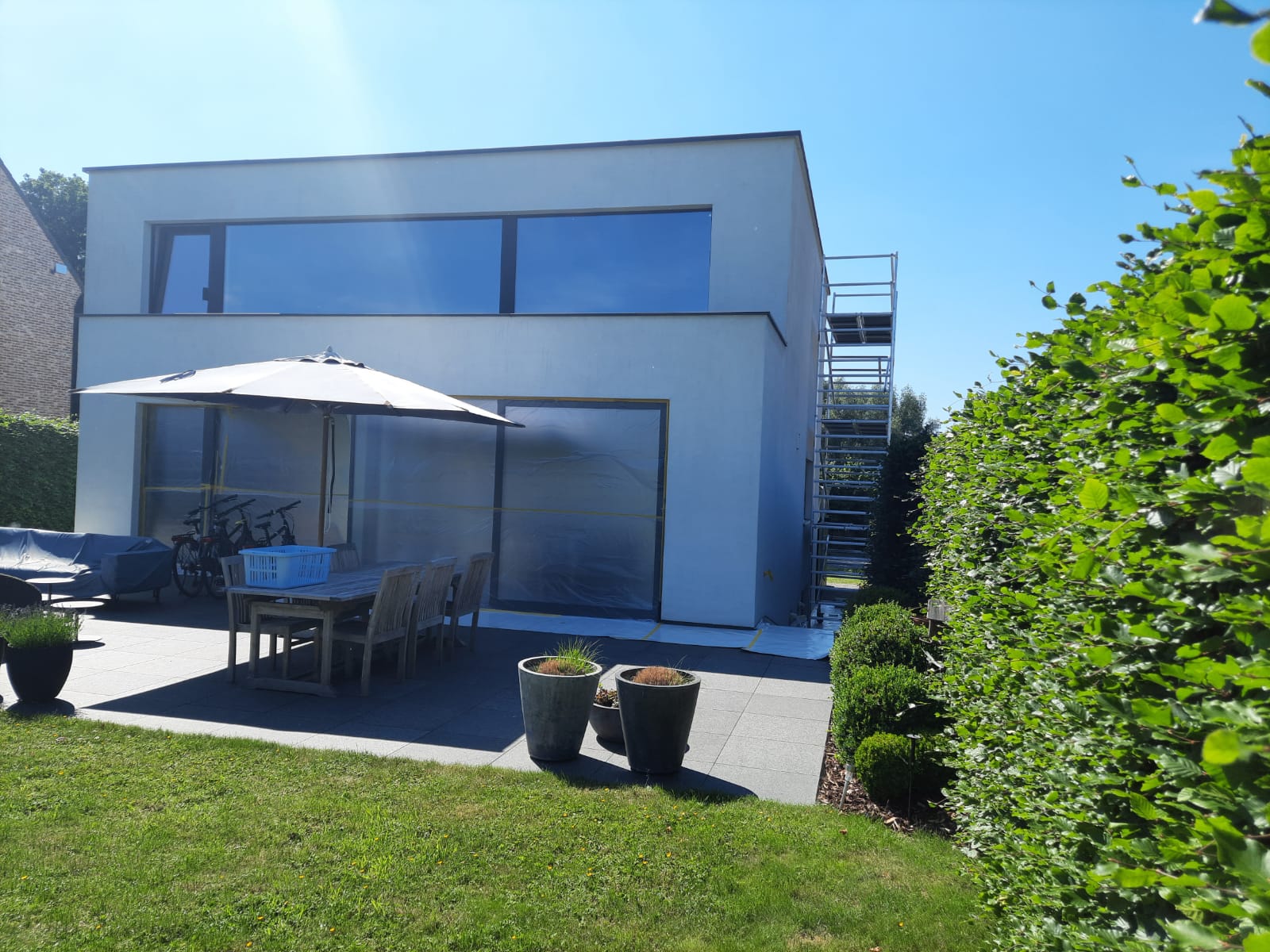
How Do You Choose the Right Color Render?
Which color is right for your home? We’d like to guide you. Consider the following factors:
- Architectural style: adapt the color to complement the architectural style. Traditional houses can benefit from softer, earthy colors, while modern homes benefit from sleeker, bolder, or darker shades.
- Landscape and surroundings: consider how your render relates to the surrounding nature and landscape.
- Light exposure: The intensity of natural light can influence color perception. Check how the color looks under different light conditions, both during the day and at night.
- Personal preference: Ultimately, it’s your house, so choose a color that you truly love and feel comfortable with. When in doubt, we recommend a soft, warm white tone.
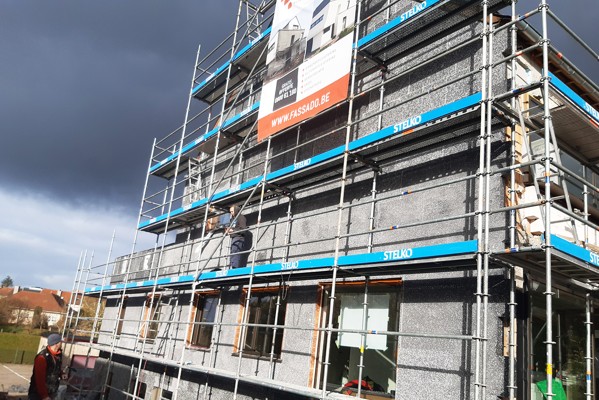
How Do You Maintain Colored Render?
Colored render is known for its durability. It’s a particularly low-maintenance facade cladding. Render is naturally waterproof, so there’s hardly any green growth. Molds, algae, and mosses don’t get the chance to adhere to your facade.
We do recommend giving the facade a gentle scrub annually. This prevents dirt from caking onto the render. Use water, a mild soap solution, and a soft brush for this. Aggressive cleaning agents are off-limits as they can affect the color pigments. Also, don’t use a pressure washer to avoid damaging the render.
You also Choose the Texture Yourself
So there are quite a few colors possible. But did you know that you can also customize the texture of the render?
Textured render adds extra character and dimension to your facade. Textured render is especially popular for renovation projects or old farmhouses, but it also fits perfectly with new construction projects.
Choose a subtle, grainy finish for a timeless result, or go for a rustic feel with a coarser texture and irregular patterns. It’s entirely your choice.
The choice for a particular texture depends on your personal preference and the style of your home. At Solusio, we’re happy to advise you.
Solusio: the Render Expert in your Area
Looking for colored render for your facade? Then you’re certainly at the right address with us. We’d love to visit you to tell you more about the possibilities regarding color shades. Contact us today!