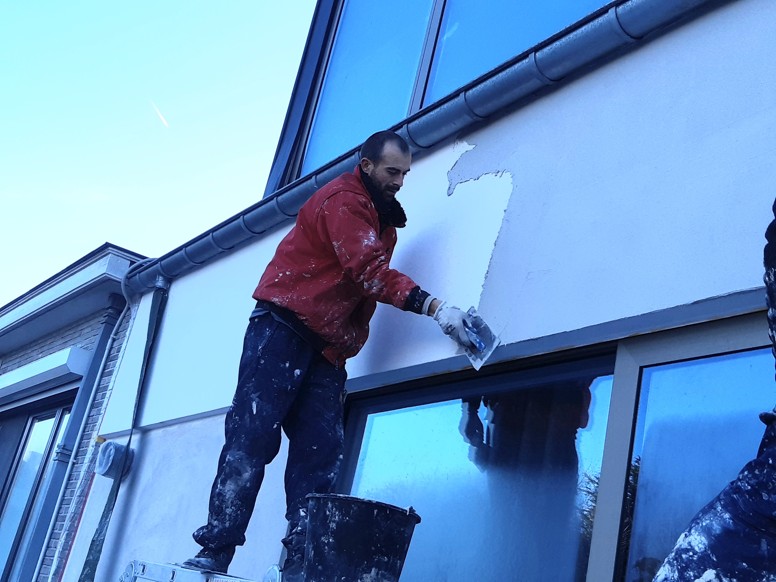
Render is a fantastic way to breathe new life into your facade. Whether you want to renovate an old facade in a stylish way or give a new-build home a fresh look, render is always a good idea. You might want to save costs by applying the render yourself, but we warn you against this. A considerable amount of expertise is required. Below, we list the most common mistakes made when applying render.
Mistakes with Render and Roof Edge Profiles
The most common mistake made when applying render occurs during the preparatory work. It’s important to use profiles, as they allow the render to adhere well to the wall. In particular, the roof edge profiles and drip edge profiles are essential.
The roof edge profile ensures that no water can seep behind the render. The connection between the roof and the render is then completely waterproof. The drip edge profile is located just above the plinth and has the same function. Water drains away properly and cannot get behind the render.
Not Cleaning the Facade: a Serious Mistake with Render
There’s probably a reason why you want to renovate the old facade. Possibly there are cracked bricks or joints, the bricks are no longer completely straight, and, especially, there’s green growth.
It’s particularly important to remove that green growth. Mosses, algae, and fungi prevent the render from adhering to the facade. Those who don’t clean the bricks risk the render flaking off.
Choosing the Wrong Type of Render
It’s also important to know that there are two types of render: mineral render and synthetic render. Mineral render is the original mixture of lime, sand, and cement. You can apply it in thick layers on old facades to smooth out unevenness.
However, if you have a smooth, even facade, it’s sufficient to use synthetic resin render. This render is extra water-repellent but cannot be applied in thick layers. For old facades, it’s better to use mineral render.
Incorrectly Applying the Render
Things can also go wrong with the render itself. Applying render must be done in a specific way.
Mineral render is usually applied in one thick layer, but synthetic resin render requires two fixing layers. These ensure that the render can adhere well.
Applying Render at the Wrong Time
The weather also plays a role. Applying render in rainy weather is not a good idea. Lines may form on the render when water runs down the facade. Flaking render is then not uncommon. Freezing temperatures also prevent the application of render, even on a sunny day. The render mixture will not perform well in these conditions.
What are the Consequences of Poorly Applied Render?
Applying render incorrectly can cause annoying problems. It’s quite possible that the render will show cracks. Water damage is also a real risk. By not applying the render properly, water can get behind the render and cause moisture problems. If you combine render with insulation, you must also consider possible thermal bridges. These can lead to condensation, causing the render to crumble.
Moreover, a professional always offers a warranty arrangement. Those who apply render themselves and make mistakes cannot fall back on this warranty period. . You’ll then have to have the render reapplied by a professional anyway. Saving money by applying render yourself is only for handy individuals with experience.
Why Choose Render?
Render is the perfect facade cladding for those who want to renovate the facade relatively cheaply. It’s excellent for both classic, rural, and modern homes. Moreover, the fresh look of render lasts for a very long time.
Plaster is known as a water-repellent material that doesn’t easily suffer from green deposits. Moreover, you can order plaster in almost any color; there are many more possibilities than just white. We also like to recommend facade insulation. By insulating your facade from the outside, you can save a significant amount of money on your energy bill.
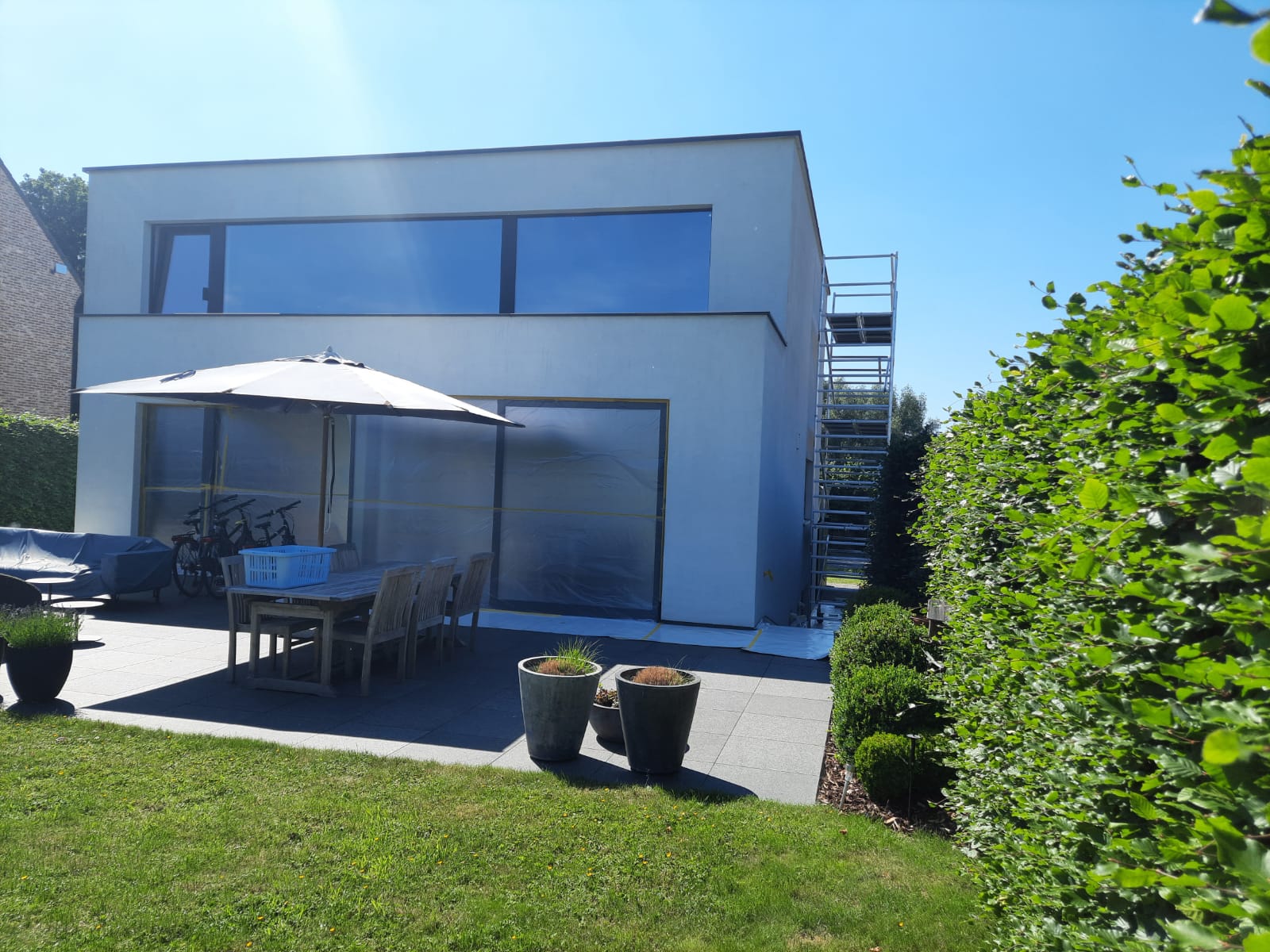
Solusio Applies Plaster in your Area
Would you rather leave the application of plaster to an expert? Then you can turn to Solusio. We know plaster like no other. Contact us today for an appointment or more information. We’ll tell you all about the different types of plaster, the finishing options, and the cost.