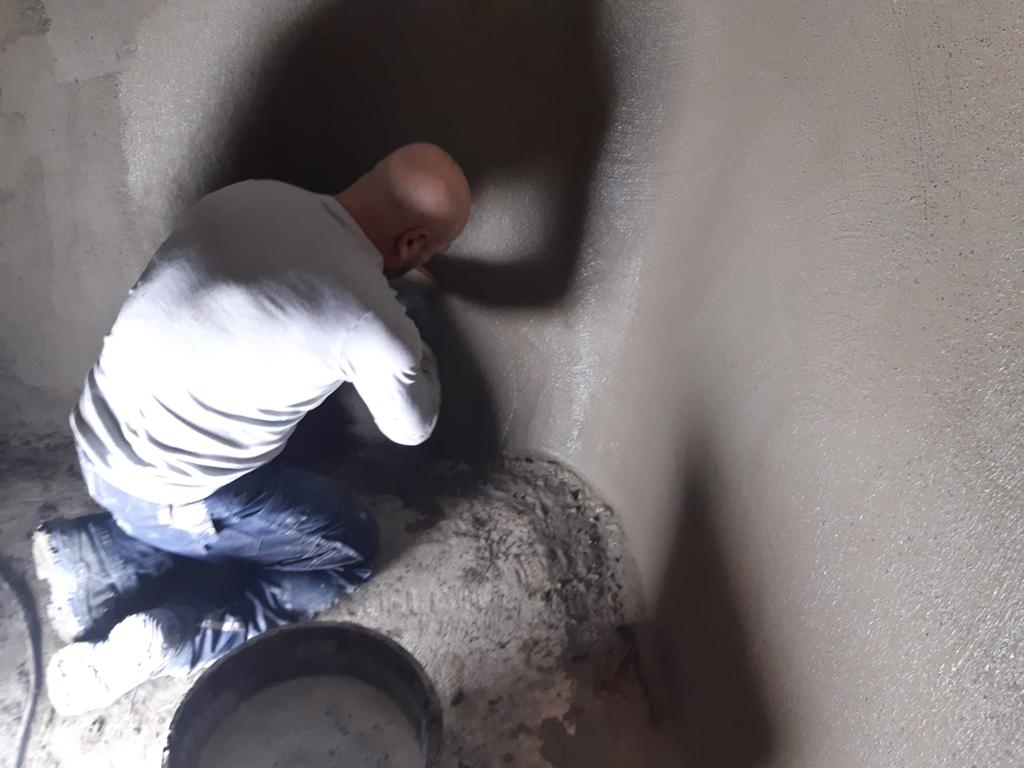
The cove joint, the area where the basement walls and floor meet, is especially vulnerable to moisture problems. It’s the first place where water can seep into your basement. If you catch it early, you can fortunately nip the moisture problem in the basement in the bud. You do this with a cove joint injection. How exactly this happens and what you need to consider, you can read below.
Why Do Leaks in the Basement Occur through the Cove Joint?
The basement is particularly susceptible to moisture problems as the entire space is surrounded by damp soil. The weakest point of the basement is the cove joint, where the basement walls rest on the concrete basement floor. This is often where the first moisture problems occur.
This is because concrete and other building materials can slightly shrink or expand due to temperature differences. Therefore, it’s possible that over time, the brick walls no longer fit perfectly against the basement floor. Small cracks and gaps are sufficient to cause moisture problems in the long term.
Other reasons why moisture can seep in through the cove joint are simply construction errors or wear and tear. Moisture problems in the basement are therefore quite common. However, this doesn’t mean you shouldn’t act quickly.
Why are Cove Joint Leaks Dangerous?
You should always address moisture problems as quickly as possible. This also applies to cove joint leaks.
- Firstly, moisture in the basement can make the walls less sturdy. Damp bricks can crumble or subside when they are completely saturated. You’d rather avoid that, of course.
- Furthermore, this moisture also brings increased humidity and molds, both of which cause respiratory complaints. Your health will also be grateful when you contact a moisture expert.
Injecting the Cove Joint Relieves You of the Moisture Problem
To halt moisture problems before the damage becomes irreversible, you can have the cove joint injected. This results in the cove joint being made 100% waterproof again and restored to its proper strength. This way, moisture can no longer gain access through the cove joint.
After treatment, the cove joint, walls, and floor are fully restored and back to being strong and resilient. This method can be applied both from the inside and outside, but in an existing basement, it will be easier from the inside.
An additional advantage of injection is that the masonry can continue to breathe due to the vapor-open properties of the injection agents used, allowing the cove joint to dry out very quickly.
How Does a Cove Joint Injection Work?
A cove joint injection is particularly efficient if performed correctly. Our experts proceed as follows.
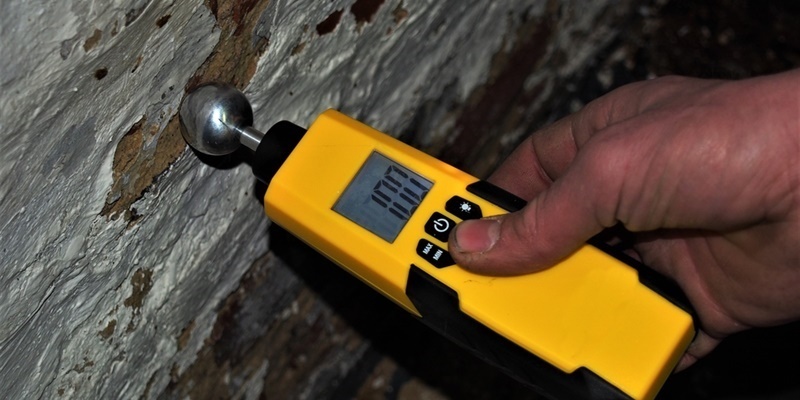
- First and foremost, we need to be sure that the moisture problem in the basement is limited to the cove joint. If moisture is also penetrating through other areas, we need to use other treatments.
- Is the cove joint the only problem? Then we will drill holes just above the cove joint, in a diagonal line. We fill these with a hydrophobic agent under high pressure.
- This way, all cracks that let water through are filled. This agent hardens and makes the wall completely water-repellent again.
- Thus, no more water can enter the basement through the cove joint.
What if a Cove Joint Injection is not Enough?
It’s very important not to just perform a cove joint injection yourself. Moisture problems in basements are very complex. Our professionals can locate the precise source of the moisture and determine if other factors are at play. There are a thousand and one ways to expel moisture from the basement.
If the moisture problem in the basement is too severe, due to high groundwater pressure for example, then more extensive measures are needed. A joint injection will not be sufficient in that case. We should then consider basement tanking. This involves re-lining the basement with several layers of a waterproof cement mixture. This is called basement tanking.
Is there often water in the basement? Then basement drainage might be necessary. A subtle pumping system is installed under that tanking.
Condensation occurs in almost every basement. Since basement spaces generally cannot be ventilated, the relative humidity increases, causing condensation on walls and ceilings. This can lead to moisture and mold problems. If that’s the case, we recommend installing a mechanical ventilation system. This is also a good idea for the rest of your home. Whatever the moisture problem may be, our experts are happy to visit you to devise the most efficient treatment.
Solusio Makes your Wall-Floor Joint Waterproof Again
Is water entering the basement through the wall-floor joint? Then it’s best to invite an expert as soon as possible to perform a wall-floor joint injection. The professionals from Solusio are happy to visit to determine the exact cause of the moisture problem. This way, we know if there’s more going on than just a leaking wall-floor joint and we can devise an appropriate treatment. Contact us today for more information and make an appointment.