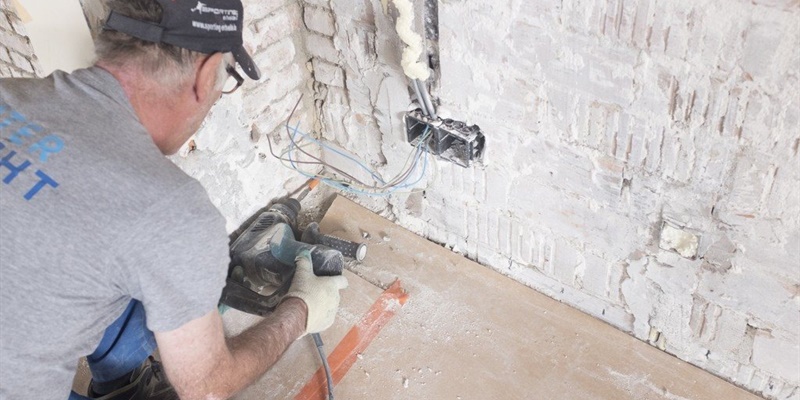
Concrete is water-resistant and an excellent building material for foundations and basement floors. However, even concrete can start to deteriorate over time. The concrete may show cracks through which moisture can penetrate. A concrete injection is then the solution. The crack is filled and the concrete is once again an excellent barrier.
Do Cracks in Concrete Cause Damage?
Concrete is ubiquitous. It is an exceptionally strong building material with countless applications. In homes, it is mainly used for the basement floor and for foundations. This is not surprising, as concrete is highly resistant to moisture. Ideal for the part of your home that comes into contact with the damp subsoil. A good concrete foundation prevents moisture problems.
And yet, even concrete shows defects over time. Over the years, the concrete becomes increasingly porous and thus absorbs more and more moisture. This problem is particularly evident in concrete that shows cracks. Through cracks in the concrete, moisture from the subsoil can penetrate into your home.
How Cracks in Concrete Form
Cracks in concrete only develop over time. They are due to either construction errors, and are thus avoidable, or weather influences.
It can happen that the concrete was not mixed properly during the works. This can lead to so-called gravel nests. These are weak spots consisting of small stones in the concrete. This is of course not the intention. Groundwater can more easily rise through gravel nests.
When concrete comes into contact with groundwater, that water can cause small cracks, fissures, or large pores in the concrete. But temperature differences can also cause cracks in concrete. When concrete is poured and large temperature differences occur, the concrete will shrink during curing. Even in the years after, concrete can slightly expand and contract with large differences in temperature. Ground shifts can also cause concrete to crack, although this hardly ever occurs in Flanders.
How are Concrete Cracks Repaired?
Cracks in concrete bring moisture problems. That’s why it’s important to address them quickly. At Solusio, we do this with a concrete injection. We fill the crack in the concrete with a specific substance. This way, the concrete is again equally water-repellent everywhere. This prevents moisture from the soil from rising into your home.
Note: a concrete injection is not always the desired treatment. We always first carry out a thorough inspection to determine the cause of the concrete crack and how best to solve the problem.
Which Injection Agents are Used for Concrete Injection?
At Solusio, we use different agents to inject concrete. Each injection agent has certain advantages that we can use well in certain situations.
In most cases, we use epoxy resin. This is a particularly strong injectable agent that adheres excellently to the concrete edges. The concrete crack is completely filled and makes the concrete extra strong at that spot. We also often use polyurethane resin. This is a type of resin that is very flexible. This makes polyurethane resin very suitable for sealing small but very harmful cracks in concrete. Polyurethane resin is perfect for concrete injections of leaks in walls and floors.
To a lesser extent, we also use acrylate gel or injection fluids. These injection agents for concrete cracks are very thin and are used to fill hollow spaces, cavities in the concrete for example. Silicates are sometimes used as well.
Solusio Performs Concrete Injections to Repair Concrete
Cracks in concrete can cause moisture problems and it is therefore important to address them. At Solusio, we know how to repair concrete cracks. Our concrete injections are professional and efficient.
Troubled by cracks in concrete? We’d be happy to come by to perform concrete injections and protect your home from moisture. Contact us today for an appointment!