Specialists in Moisture Control
Facade Insulation Woodworm Control.
How Can Solusio be of Service to You?
Solusio Builds, Protects, and Preserves
Solusio BV Has Specialized for over 25 Years in Specific Renovation Works for Homes and other Properties.
Our focus is on three activities that we offer through our various subsidiary brands: moisture control, facade works, and woodworm control.
With our years of experience, we can confidently call ourselves specialists in our field. Our craftsmen are active throughout Flanders every day.
Are you experiencing moisture problems? Is your attic plagued by woodworm or does your facade need renovation? We are happy to help!


Why Choose Solusio?
Free On-Site Diagnosis
We help you to implement more
efficient processes and accomplish
your sustainability goals.
10 to 30 Years Warranty
We help you to implement more
efficient processes and accomplish
your sustainability goals.
More than 25 Years of Experience
We help you to implement more
efficient processes and accomplish
your sustainability goals.
Solusio is a Member of the Following Federations


Customer Testimonials

Facade Cementing
“We called upon Solusio for re-cementing our side facade.
We are very satisfied with the service provided and the work done. Everything is always well communicated and they keep their word. Top company!”

Facade Renovation
“We went to look at the works in Gentbrugge yesterday and you have carried this out excellently.
Thank you very much and we will certainly promote you!”

Moisture Control
“Hello Frederik, we are very satisfied with the work delivered. Fast, good, and clean!”
Tips and Advice
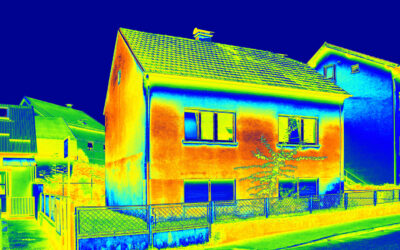
A black corner, damp patch, or strip of mould is often immediately labeled a thermal bridge. However, the same damage can also be caused by rising damp, water infiltration, condensation, or a leak. Recognizing the correct cause is important, as every form of damp requires a different treatment. A thermal bridge is not an opening through which water flows. It is a point in the building envelope where heat is lost more easily. The inner surface becomes colder there, allowing moisture from the indoor air to condense locally and mould to develop. Suffering from damp or mould? Contact Solusio!Make an appointment for a free site visit without obligationContact What is a thermal bridge? A thermal bridge, also known as a structural junction, occurs where the insulating layer is interrupted, thinner, or difficult to connect. This happens, for example, at a concrete lintel, balcony slab, floor-to-wall connection, window reveal, or the transition between roof and facade. In such places, the surface temperature is lower than on the rest of the wall. When the air in the house is sufficiently humid, the relative humidity rises right against that cold surface. Condensation can occur, followed by mould. Which signs indicate a thermal bridge? Damage caused by a thermal bridge often appears in predictable architectural locations. Think of a black line in an external corner, mould around a window, discoloration against the ceiling, or a cold strip at the level of a concrete beam. The problem usually becomes clearer during cold months. The area feels colder than the surrounding wall, and the damage pattern often follows the shape of the cold building detail. Mould can be more severe behind a cupboard or curtain because the air circulates less there. How does a thermal bridge differ from rising damp? Rising damp starts at the bottom [...]
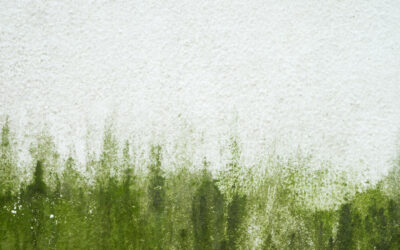
Do you notice green, dark, or stained patches on your facade? This is often caused by biological growth such as algae, moss, or fungi. Facades that remain damp for long periods, receive little sunlight, or are located close to trees and vegetation are particularly susceptible. These deposits don't just look untidy; they can also indicate that the facade is not drying out quickly enough. Green deposits do not automatically mean your facade is seriously damaged. However, it is wise to assess the cause first before choosing a cleaning method. The wrong treatment can damage render, mortar joints, or porous bricks. Cleaning or renovating your facade? Contact Solusio!Book a free, no-obligation site visit todayContact What are those green deposits on the facade? A green facade is usually caused by microorganisms that develop on a damp surface. Algae often form a thin green layer. Moss tends to grow on rough surfaces and in joints. Dark or black discolouration can also consist of fungi, atmospheric dirt, or a combination of different pollutants. According to Buildwise, biological contamination of exterior render often consists of algae, cyanobacteria, and fungi. The correct treatment depends on the appearance, the substrate, and how far the contamination has progressed. Why do some facades turn green faster than others? Dampness is the most important factor. A facade that dries quickly after rain offers fewer opportunities for algae and moss. A north or north-east facing facade receives less sun and generally stays wet longer. Shade from trees, a thick hedge, or a nearby building also slows down the drying process. In addition, the texture and colour of the finish play a role. Contamination is more noticeable on light-coloured render. A rough or porous substrate retains water and dirt longer. Overflowing gutters, leaking downpipes, poor drip edges, and splashing rainwater can put [...]
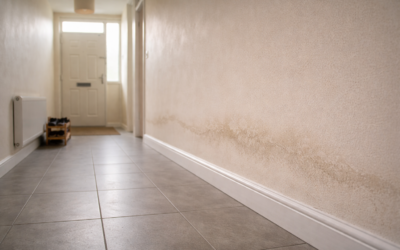
The industry must adopt strategies to meet today’s supply challenges.