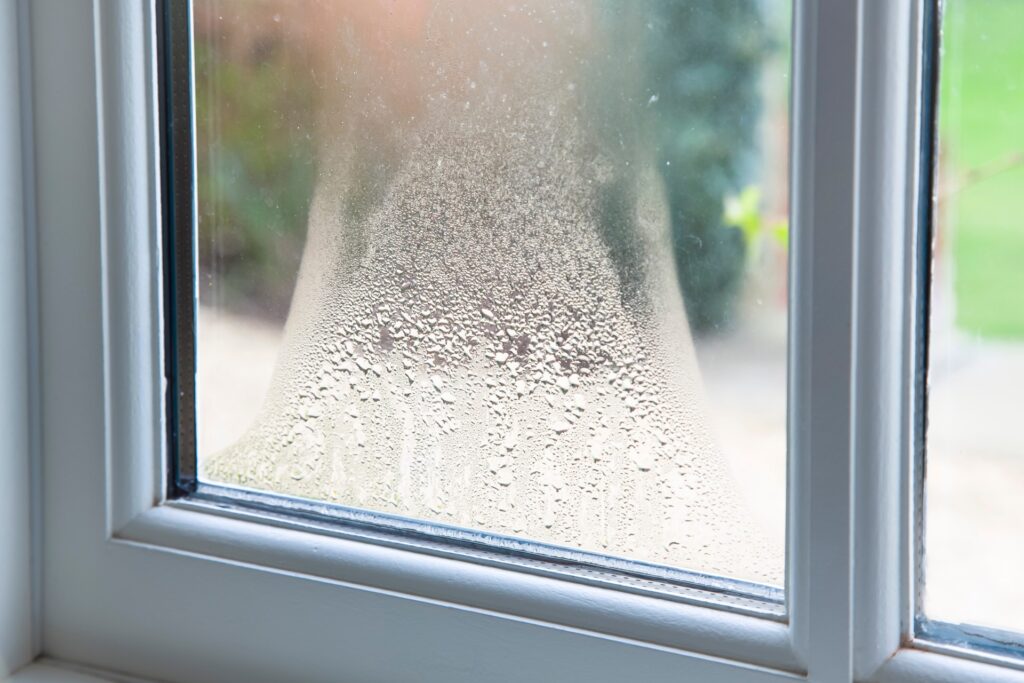
Moisture on the windowsill is a more common problem than you might think. It often starts small: a damp spot in the corner of the window, some peeling paint, or a dark edge on the wood itself. Yet, it’s rarely harmless. Behind such a spot, a larger moisture problem can be hidden that, if not addressed, can lead to wood rot, mold, and even health issues.
Moisture on the Windowsill: the Cause
Cause 1: Condensation
The first possible cause of moisture on the windowsill is condensation. Condensation occurs when warm, humid indoor air comes into contact with a cold surface, such as the window or the windowsill itself. The water vapor in the air then condenses into small droplets.
Condensation primarily occurs in rooms with high humidity, such as bathrooms, kitchens, or poorly ventilated bedrooms. Single glazing or poorly insulated windows amplify the effect, as the inside of the window is then extra cold, causing water vapor to condense even faster.
However, condensation is usually not the main reason for moisture on the windowsill. Condensation usually appears temporarily, especially in the morning or after cooking or showering, and dries up again with sufficient ventilation.
How to Recognize Condensation:
- The moisture appears with temperature differences and then disappears.
- There are no permanent damp spots on walls or window frames.
- The problem disappears when you open the windows to ventilate.
Cause 2: Penetrating Damp
In most cases where damp spots on or under the windowsill keep reappearing, penetrating damp is the real cause. Rainwater can then seep in from outside through the facade, joints, or window frames.
Around windows and sills, this risk is greater because there are often small weak spots in the sealing between the wall and the window frame. Damaged joints, cracks in the masonry, or aged seams are all problem areas.
How to Recognize Penetrating Damp:
- Dark spots or damp rings on or around the windowsill.
- Peeling paint, loose plasterwork.
- The problem persists, even with good ventilation.
- The damp spots worsen after rainy weather.
How Do You Solve Moisture on the Windowsill?
Whether it’s condensation or penetrating damp, each type of moisture problem requires a targeted solution.
1. Solutions for condensation
The most important thing to do when you suffer from condensation? Improve the ventilation in your home. Ensure sufficient air circulation daily. This can be done temporarily by regularly opening windows, but the real solution is a mechanical ventilation system. Fresh air is then continuously brought in without heat loss. 24/7 fresh indoor air, without drafts.
2. Solutions for penetrating damp
Damaged joints are a major entry point for rainwater. Have them re-cut and re-pointed, or have the facade waterproofed (impregnated) to make it water-repellent. It goes without saying that you should replace poor sealant joints around windows and regularly check and, if necessary, repair the protective paint layer on window frames.
And most importantly: have a professional moisture measurement carried out. Only then can you precisely identify where the moisture comes from and how to solve it. Treating it yourself without knowing exactly what’s wrong will never work long-term. Moreover, it’s possible that the moisture problem is larger than you initially suspect. It is then important to act as quickly as possible.
The Dangers of Moisture around Windows
Moisture on or under the windowsill might initially seem like just an aesthetic problem, but it can have far-reaching consequences for your home and your health.
1. Wood rot and structural damage
For wooden window frames, prolonged exposure to moisture can logically lead to wood rot. The wood then swells, loses its strength, and begins to crumble.
2. Mold formation and musty odor
Damp surfaces provide the ideal breeding ground for mold. You can recognize it by black or gray spots.
3. Health complaints
Mold spores can lead to respiratory problems, allergies, and irritation of the eyes or throat. Children, the elderly, and people with asthma are particularly susceptible to this.
4. Damage to walls and paintwork
Persistent moisture can cause the paint and plasterwork on the wall around the windowsill to come loose. This only increases the cost of repairing everything.
5. Energy loss
Damp walls insulate poorly. This means that heat escapes faster, and you therefore have to heat your home more to maintain its temperature, resulting in higher energy bills.
Solusio Combats Moisture on and around the Windowsill
Moisture on the windowsill is a warning that your home is struggling with a moisture problem. By acting quickly, you prevent serious damage to walls, window frames, and health.
At Solusio, we specialize in detecting and remedying moisture problems. Our experts perform a professional moisture analysis, so you know exactly where the moisture comes from and how to permanently eliminate it. Contact Solusio today for a free moisture diagnosis!